Every salon visit in Pineville starts, or should start, at the shampoo bowl, and most clients file the experience under relaxation: warm water, a reclined chair, a few quiet minutes. Salons that run a proper wash house treat it as a service in its own right, and there are practical reasons. Your scalp is skin, your hair carries a month of product and environment on it by the time you sit down, and neither problem is solved by the thirty-second lather most of us do at home in the shower.
What a wash house service actually includes
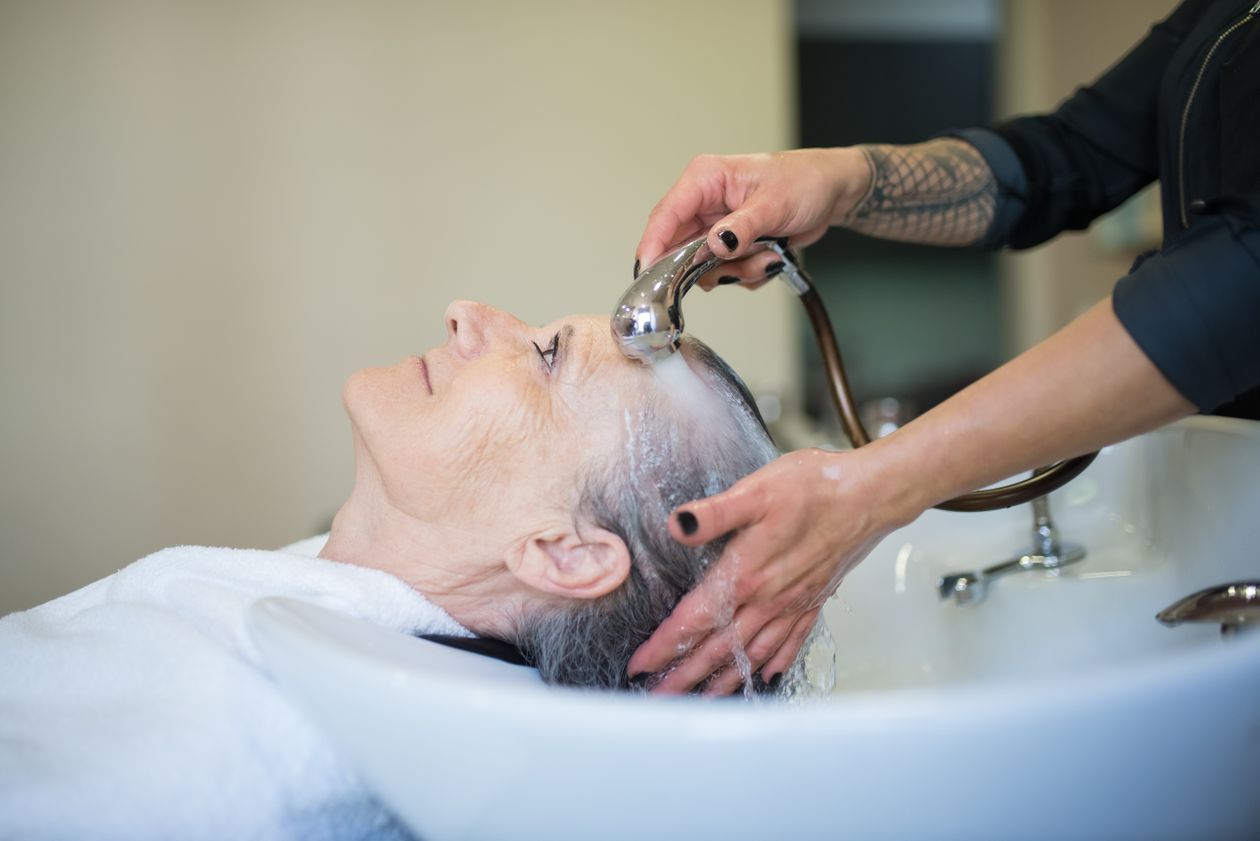
The wash itself is longer and more deliberate than a home shampoo, with attention to the scalp rather than the lengths: working the cleanser across the whole scalp in sections, including the hairline and the nape, where buildup concentrates and where most home washing never reaches. A second cleanse is standard practice in salons, and it is not product waste; the first pass loosens oil and product, the second actually cleans, which is why salon-washed hair feels different for days.
A wash house menu typically adds treatments around that wash: clarifying when buildup is the problem, deep conditioning when condition is, and scalp-focused care when flaking, oiliness, or irritation is. Which one your hair gets should follow a quick look at your scalp and a feel of your ends, the same diagnostic habit that starts a good color consultation.
| What you notice | What is likely going on | Wash house answer |
|---|---|---|
| Hair feels coated even after washing | Product and mineral buildup | Clarifying wash, then a washing-habit talk |
| Flakes and an itchy scalp | Dry scalp or product residue at the hairline | Scalp-focused cleanse and exfoliation |
| Color looks dull within two weeks | Mineral film from water dulling the surface | Clarifying or chelating treatment, then home-water advice |
| Ends feel rough, hair tangles wet | Condition loss, especially on lightened hair | Deep conditioning treatment and a trim check |
| Flat roots by the second day | Oil plus heavy products at the scalp | A proper double cleanse and lighter product placement |
The Piedmont layer: pollen, humidity, and water
Local conditions load hair up faster than the calendar suggests. Spring pollen settles on hair and scalps across Pineville and can leave sensitive scalps itchy for weeks; a thorough wash house visit during peak pollen is scalp care, not indulgence. Summer humidity swells the hair shaft and makes product sit heavier. And treated municipal water leaves mineral film that builds slowly, especially on blonde and gray hair, where it can read as dullness or a faint brassy cast that no toner will fix until the film comes off.
None of that rinses away in a quick home wash, because home washing is optimized for speed. The wash house is optimized for thoroughness, once in a while, which resets the baseline your home routine then maintains.
Between visits: washing at home like the bowl taught you
Two habits transfer directly. First, shampoo the scalp and let the rinse clean the lengths, rather than piling all the hair on top of your head and scrubbing it into a tangle. Second, condition from mid-length down, every wash, and give it a couple of minutes before rinsing. Add a clarifying wash at home every few weeks if your stylist recommends one for your water and product habits. With those in place, the wash house visit becomes a periodic reset rather than a rescue, and color, cuts, and treatments all behave better on a clean baseline.
One more transferable detail: water temperature. The bowl runs warm, never hot, and for the same reason as the color advice elsewhere in this series. Hot water at home lifts the cuticle, roughens the lengths, and sends color and moisture down the drain together. Warm water and a little patience at the scalp will get hair just as clean.
Common questions
Why does my hair stay clean longer after a salon wash?
Because of the double cleanse and the scalp coverage. Most home washes miss the nape and hairline and stop after one pass, so oil and product return faster.
How often should I get a treatment at the bowl?
It depends on the problem being treated: buildup and mineral film are periodic resets, while condition support for lightened or texturized hair is often tied to your color or cut rhythm. Your stylist sets it from your hair, not a schedule on the wall.
Can a wash house visit help an itchy scalp?
Often, yes, when the cause is buildup or dryness. A wash house service cleans the scalp thoroughly and can include scalp care. Persistent irritation, sores, or heavy flaking belong in front of a dermatologist as well.
Photos in this guide are representative stock images.
← All guides from Studio 321← Back to Studio 321